Best Baby Carriers for Exercise: A Fitness Pro’s Guide
Elise Hall | APR 5, 2025
*this post contains some affiliate links, which allows me to earn a small income from any purchases you make from the brands I recommend. I only ever recommend brands I actually believe in.
Looking to get moving while keeping your baby close? Babywearing during exercise can be a beautiful way to care for your body and your baby—but not all carriers are equally suited for movement.
As a fitness pro and doula who specializes in postpartum movement and pelvic floor health, I’ve tested just about every carrier type out there. In this guide, I’ll walk you through the pros and cons of each, how they impact posture and pelvic floor pressure, and how to choose the right fit for your body and your baby.
Quick Note on Alignment & Pelvic Floor Health
Before we dive into specific carriers, let’s talk posture. When you're babywearing—especially during movement—alignment is everything. The carrier should hold your baby snugly and close, supporting their spine without pulling your body off-center. Poor alignment can overload your pelvic floor, especially if you're still recovering from birth.
Also important: some structured waistbands can increase downward pressure on your core and pelvic floor. For those navigating diastasis recti, prolapse, or just rebuilding postpartum, choosing the right carrier (and position!) can make a huge difference.
That’s why I often recommend switching to back carries as soon as your baby and your carrier manufacturer allow it. Carrying your baby on your back allows for more even weight distribution, gives your core more freedom to activate, and is generally easier on your pelvic floor as baby gets heavier. Some people also find that switching to an apron-style carrier with a less-structured waistband can be helpful (this Happy Baby, Integra, or Ergobaby Embrace)
💡 Want help assessing your carrier fit? Watch my Carrier Fit for Exercise video to learn how to optimize your alignment and movement while babywearing.
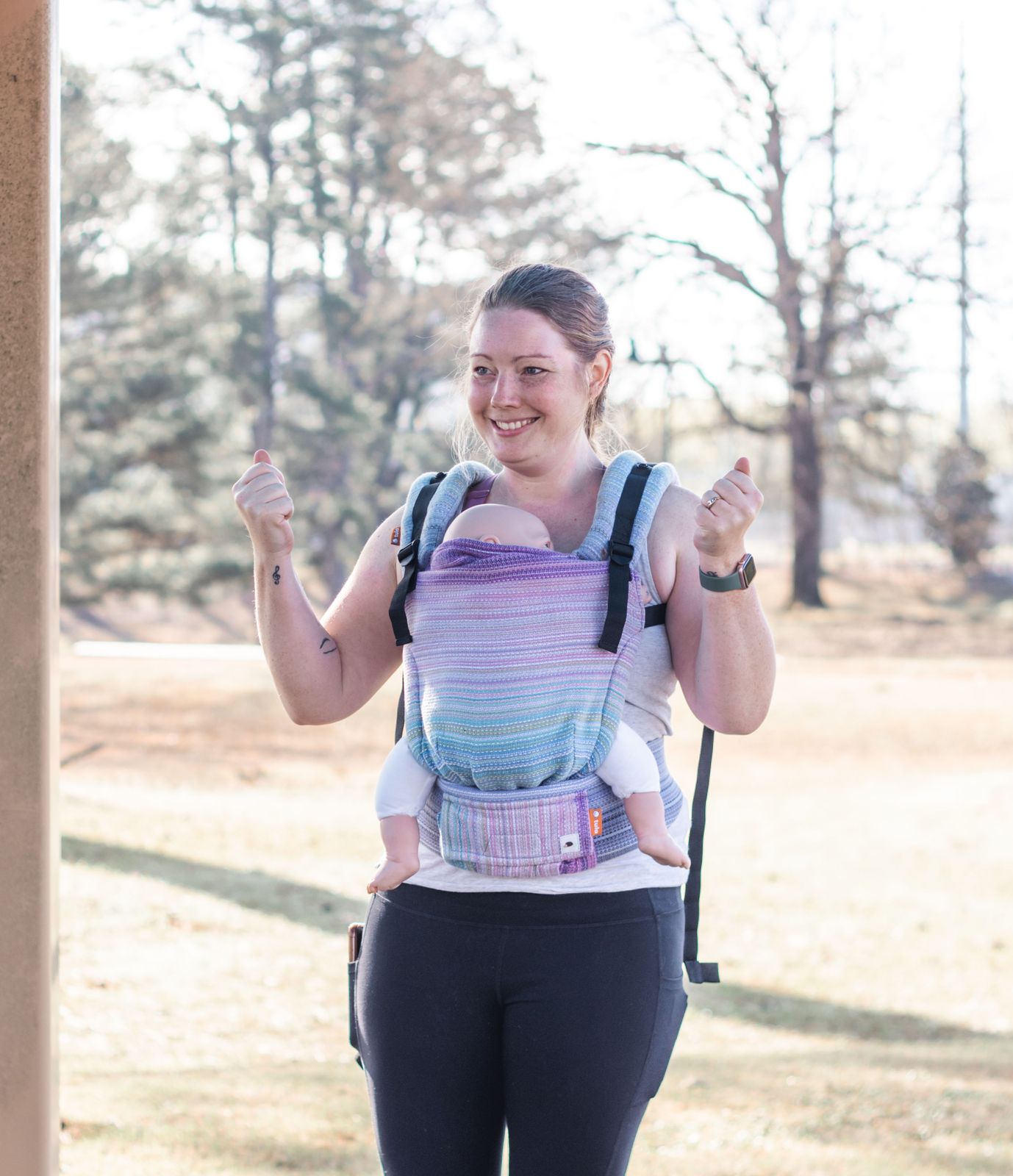
Structured (Soft-Shell) Carriers
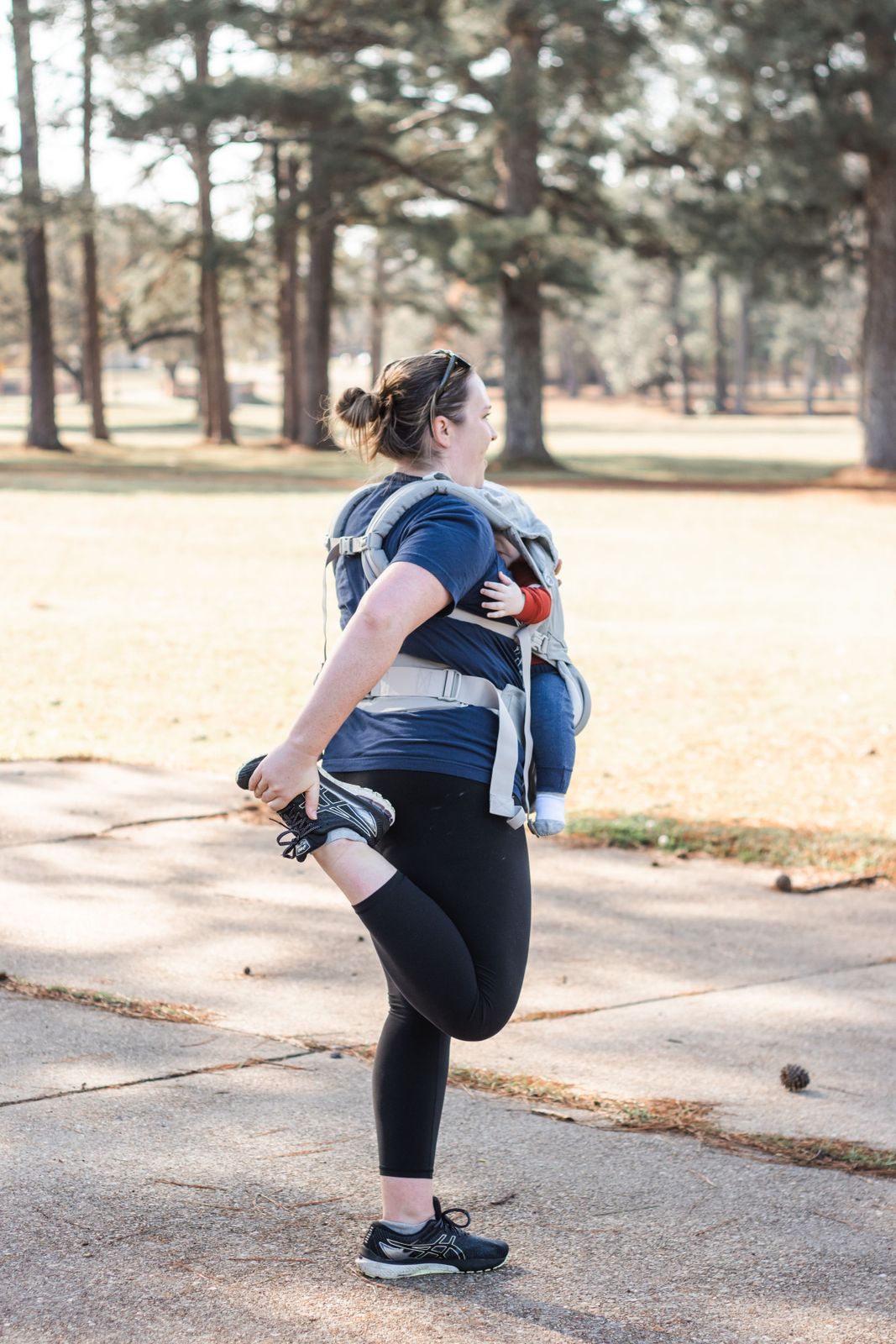
Think: Ergobaby, Baby Tula, Kinderpack
Pros:
- Quick to buckle on and off—super convenient
- Padded shoulder straps offer solid support
- Ergonomic designs support longer walks, hikes and standing movement
- Great for older babies and toddlers
- Many offer back carry options (and they really shine for this purpose)
Cons:
- Waistbands can press down on the pelvic floor—be mindful if you’re healing postpartum and don’t over tighten
- Can be bulkier than other options, and some find them harder to wash
- Can be warm depending on fabric
- Less forgiving if you’re in between sizes or have a short torso
Best for:
Brisk walks, babywearing dance, low-impact standing workouts, or hiking (especially with back carry).
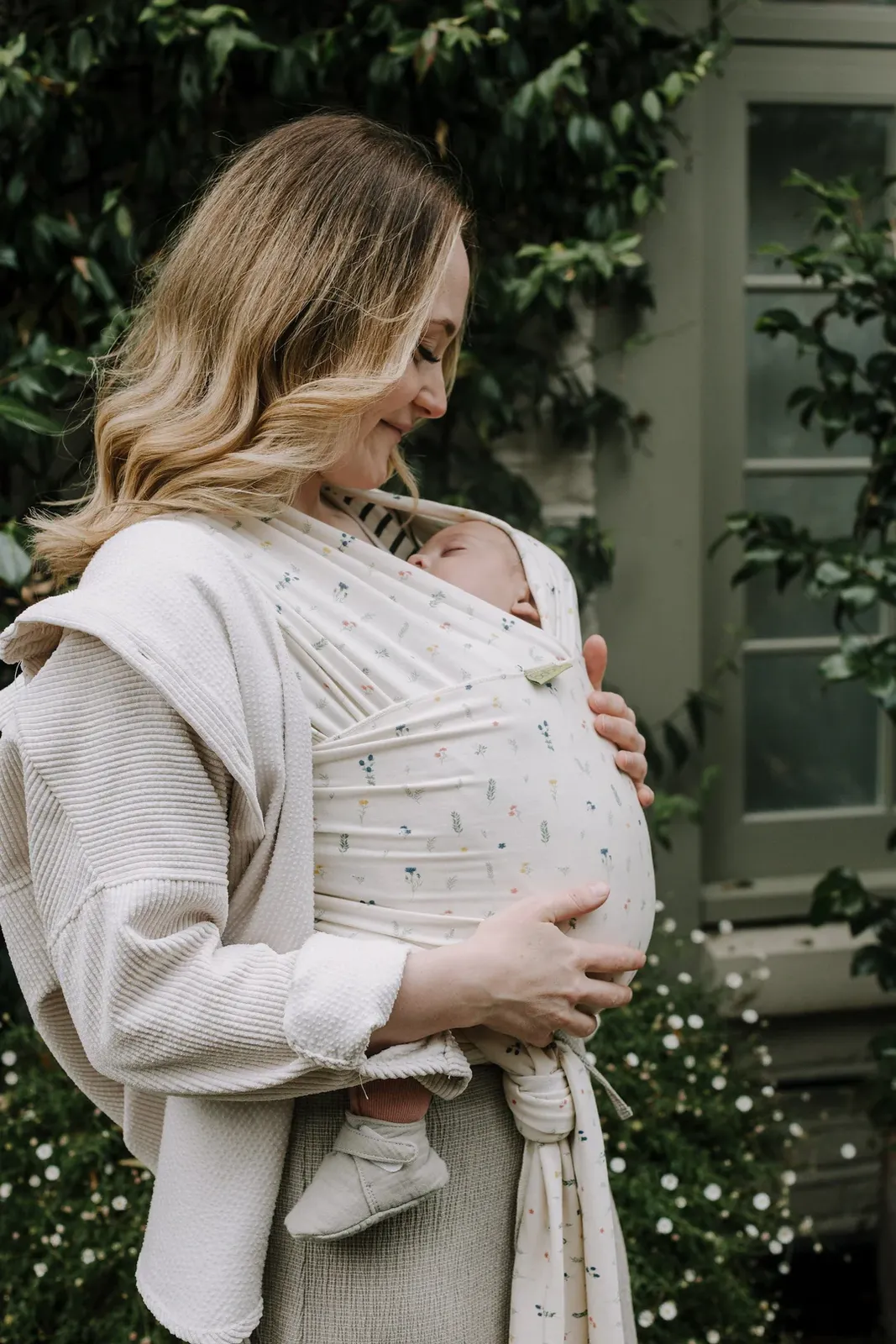
Stretchy Wraps
Pros:
- Soft and cozy—ideal for newborns
- Customizable fit that molds to your body
- No hard waistband, so less pressure on the pelvic floor
- Easy to clean
Cons:
- Can sag with movement or heavier babies, or if you sweat a lot
- Not supportive enough for vigorous movement
- Often very hot, as you need three layers of fabric over baby (and those layers are made of polyester)
- Front-carry only
Best for:
Gentle walks, yoga, and light postpartum movement during the early months.
Woven Wraps

Think: Didymos & Girasol (both of which you can buy in North America from Little Zen One - use the code MOMBOD for $20 off!), Oscha (use code MOMBOD for 10% off, although these can also be purchased at Little Zen One)
Pros:
- Supportive for babies and toddlers of all sizes
- Incredibly customizable fit for any body type
- Can be used for front, hip, or back carries (even with young babies)
- Generally easy to wash and maintain (depending on fabric choice)
Cons:
- Some find it a steeper learning curve to wrap securely
- Long tails can be tricky when exercising
- Takes time to adjust for perfect tension
- Can be hot, depending on fabric and carry type
Best for:
Parents who want a custom fit and flexibility to move in comfort, especially those transitioning to back carries.
Meh Dais / Bei Dais

Think of these as a blend between wrap and structured carrier—panel body, tie-on straps. They aren’t all that common, but some great options to look into are hope&plum, BabyHawk (used on eBay etc.), and LennyLamb (also available at Little Zen One if you don't want to purchase from Poland).
Pros:
- Balanced support without buckles
- More approachable than a woven wrap but still customizable
- Great torso fit for front, hip, or back carries
- Simpler to clean than structured carriers
Cons:
- Not as quick to take on/off as buckle carriers
Best for:
Standing strength workouts, long walks, or movement that benefits from even baby weight distribution. Since there’s no structured waistband, these are also great for yoga.
Ring Slings
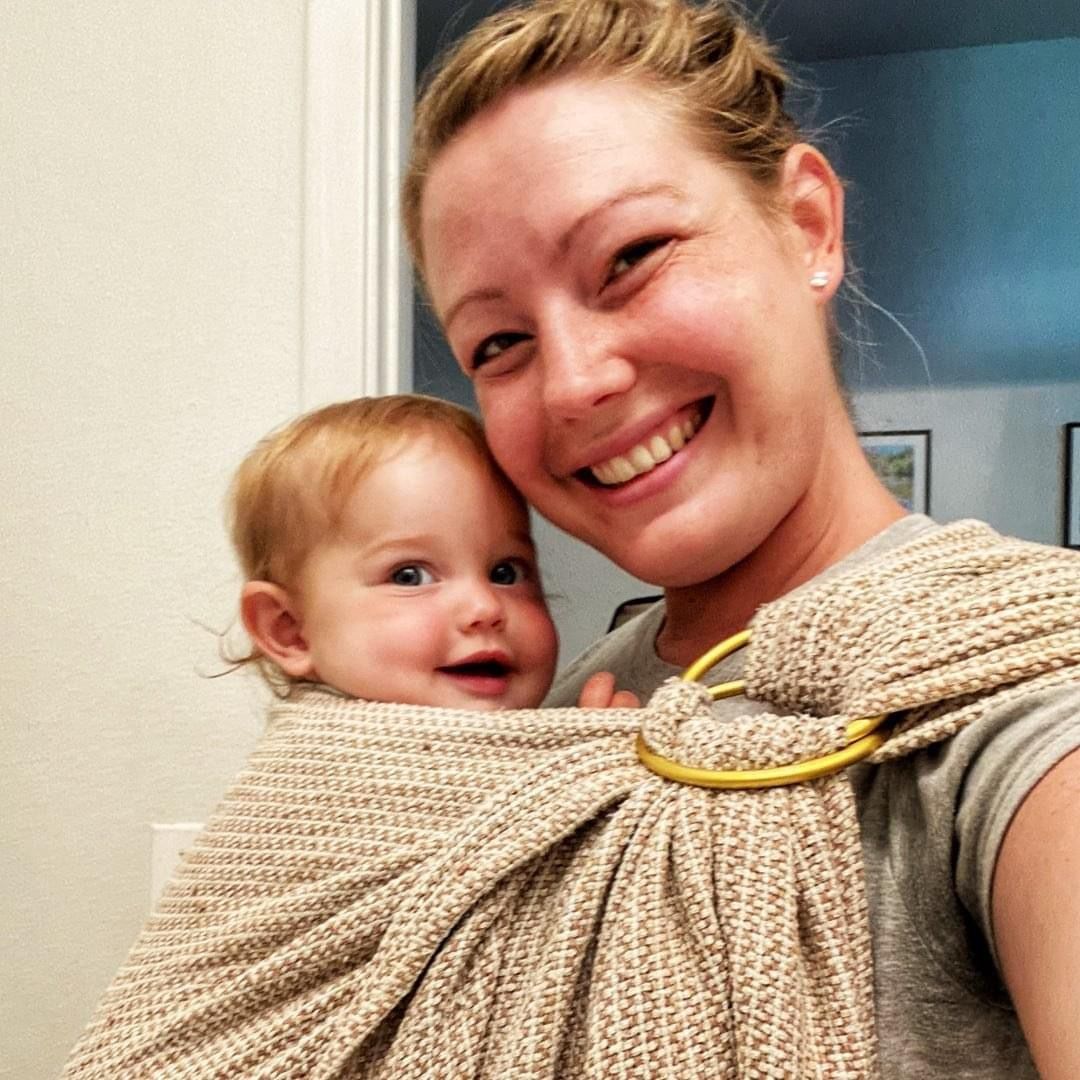
A one-shouldered option with fabric threaded through rings. My absolute favorites of alllllll time are the hemp/cotton blends from hope&plum...they are so soft and easy to adjust right out of the box!
Pros:
- Quick to adjust and pop baby in/out
- Compact and travel-friendly
- Cooler than many wrap options
- Easy to clean and dry quickly
Cons:
- One-shoulder carry can create imbalance during exercise
- Not supportive enough for extended wear or heavier babies
- Not ideal for symmetrical movement patterns
Best for:
Quick movement sessions around the house, gentle warm-ups or cool-downs, or light walks. Make sure you swap sides throughout your day or week to improve muscle balance for you and baby.
Onbuhimo

A waistless, high-back carrier typically used once baby has full head and trunk control. My personal favorites are the ones from LennyLamb because I find the shoulder padding most comfortable.
Pros:
- No waistband—fantastic for pelvic floor sensitivity
- Baby rides high on your back, giving you full front range of motion
- Some brands can be worn on the front from newborn age
- Lightweight and easy to pack
Cons:
- Loads all of baby’s weight onto your shoulders
- No front carry option
- Can sometimes throw off balance when moving quickly
- Can be intimidating if you’re not used to back carries
Best for:
Slow workouts without quick movements, shorter workouts that involve lots of bending or squatting, yoga
Why Back Carries Are a Game-Changer for Fitness
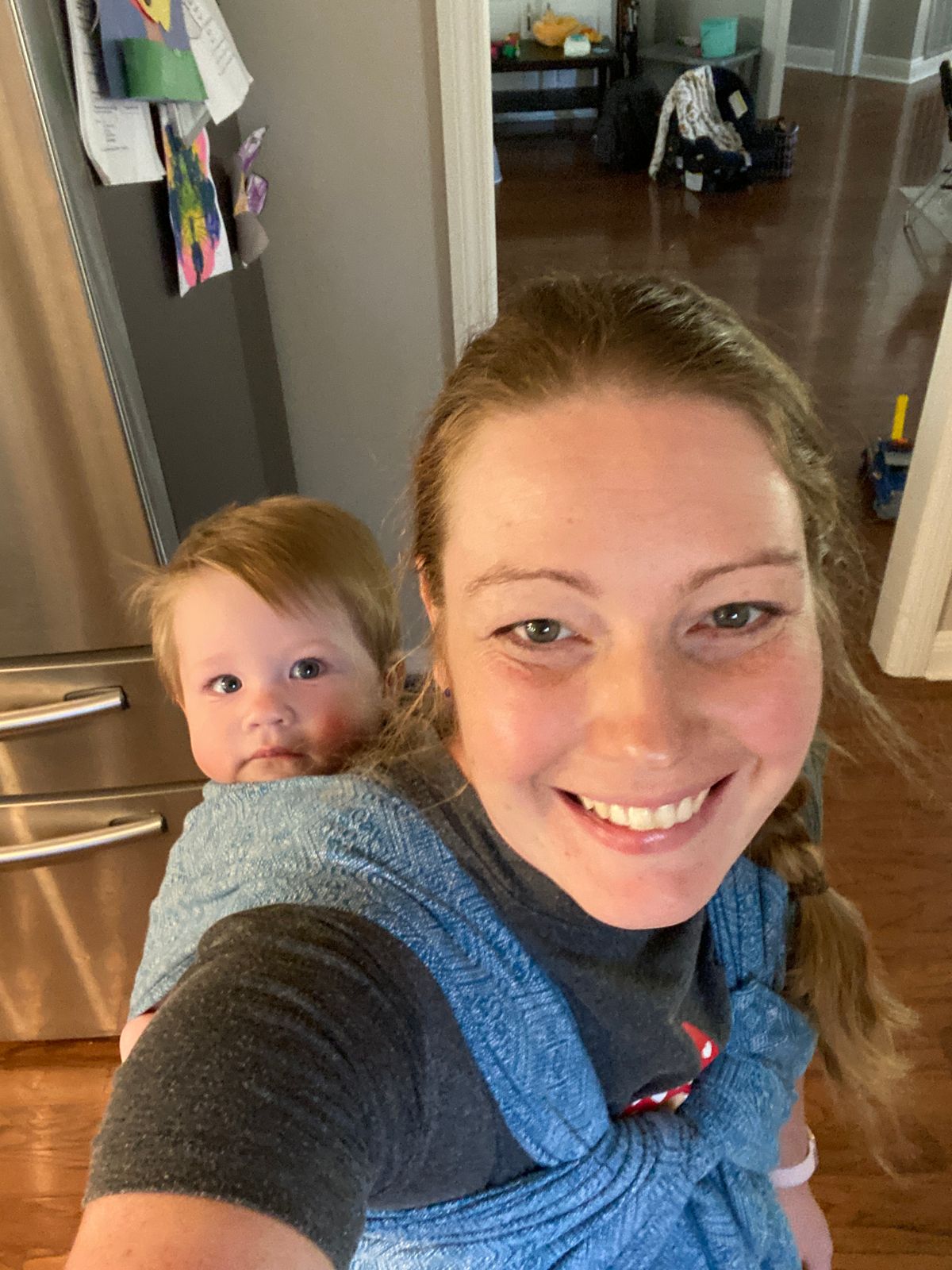
Once your baby is old enough and your carrier allows it, switching to a back carry is one of the best things you can do for your body. It distributes weight more evenly, improves your posture, reduces pelvic floor pressure, and frees up your front for easier breathing and movement.
If you’re not sure when or how to start back carrying, or how to tell if your alignment is on point, I’ve got you!
Final Thoughts
Babywearing can make postpartum movement more accessible, more joyful, and more connected. But the wrong carrier—or even the right one worn with poor alignment—can increase strain on the pelvic floor, make posture worse, and turn your workouts into something that doesn’t feel good.
Choose a carrier that suits your body, your baby’s stage, and your movement goals—and if in doubt, reach out for a fit check or join one of my babywearing-friendly fitness classes. You deserve to move in ways that feel strong, aligned, and supportive (in more ways than one!).
Want a week of babywearing workouts you can actually do?
If you’re ready to stop waiting for the perfect moment to move your body—and want short, feel-good workouts you can do while babywearing—join my free 5-day series:
Elise Hall | APR 5, 2025
Share this blog post



 OfferingTree